


Hill Climb Racing
4.2367.14K Reviews
App Specs
- Version
- 1.70.0
- Updated On
- License
- Free
- Downloads
- 1,000,000,000+
- Developer
- Fingersoft
- Categories
- Racing
- Platform
- Android, iOS
Screenshots
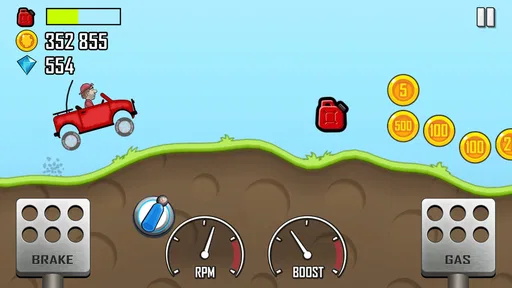
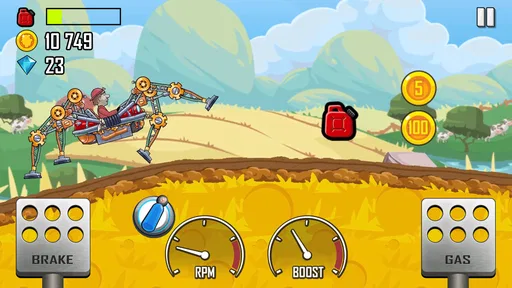
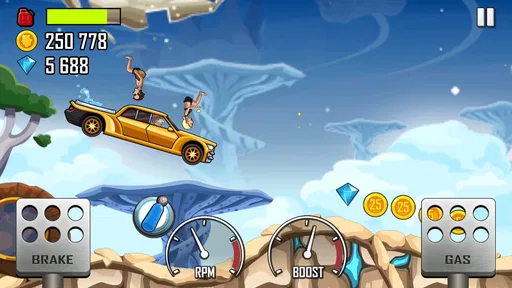
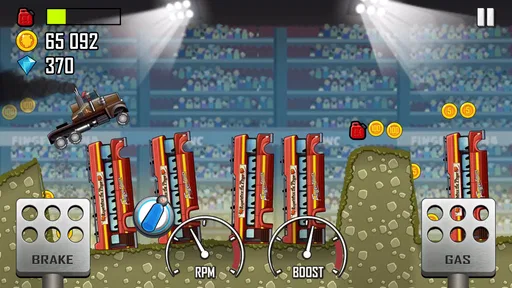
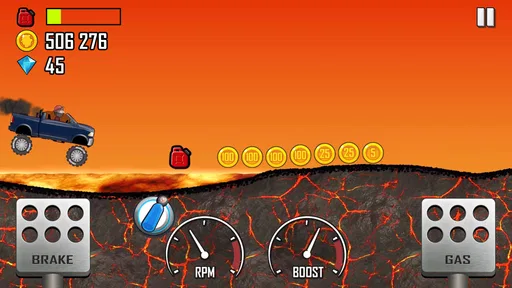
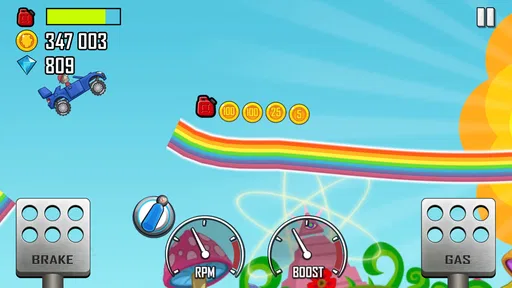
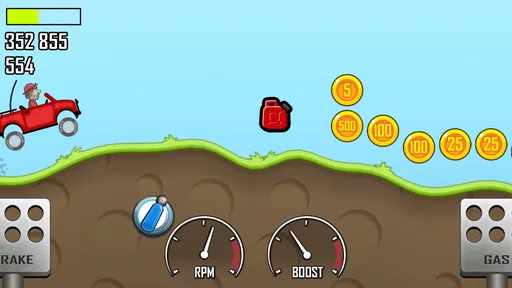
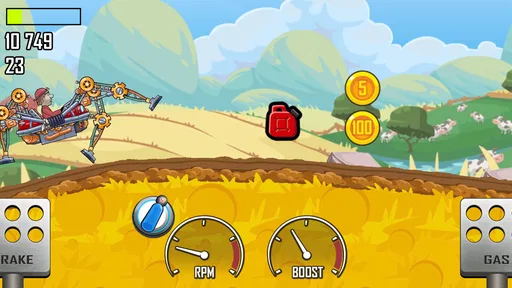
 Analysis by AppCompare
I judge a short-session racing game by what happens when I have only a few minutes, and Hill Climb Racing is particularly good at making those minutes feel active. Its appeal is not about polished, high-speed competition: it is about reading uneven ground, keeping a vehicle upright, and deciding when to push rather than ease off. That small, repeatable challenge is why I can see myself opening it while waiting for a ride or taking a quick break, then putting it down without needing to plan a long session.
Speed is something you manage, not simply chase
The game’s racing label might suggest constant acceleration and head-to-head action, but the pace here is more about momentum and balance. A fast approach can help carry a vehicle over a rise, yet the same speed can turn a bump into a flip. I found that paying attention to the shape of the next slope is more useful than holding the accelerator and hoping for the best. The satisfying moments come from adjusting in time, not from reaching a top speed.
That makes the learning curve approachable but not entirely effortless. The controls are simple to understand, while the consequences of a mistimed push become clear quickly. If you want a racing game built around overtaking opponents, precise lap times, or realistic track driving, this is a different kind of experience. I would choose a conventional circuit racer for that. Here, the terrain itself is the main opponent, and each run invites you to see whether a slightly more careful approach will carry you farther.
Guides and Analysis on Hill Climb Racing
Small sessions, with a reason to try again
A realistic use for this game is a commute break when I have a few minutes but cannot commit to a story mission or a full race. I can start a run, focus on the next hill, and stop after a crash without losing track of a complicated plot. Its offline play also makes it a practical option when a connection is unavailable, such as waiting somewhere with unreliable service. I still would not assume that every surrounding app feature works offline, but the core appeal is well suited to playing without a network connection.
The quick-run format has a trade-off: a session can end abruptly when a vehicle lands badly or runs out of momentum. That can be funny, but it may frustrate someone who prefers a clear finish line and a guaranteed sense of completion every time. I like that a failed attempt can prompt an immediate rethink—perhaps I should ease off near a steep crest or avoid treating every dip as a launch ramp. The restart is most enjoyable when I treat it as a new experiment, not as proof that the game owes me an easy win.
Because progress depends on both handling and vehicle improvements, it helps to notice which problem is actually stopping a run. If I keep losing control over uneven ground, better balance and suspension may matter more than simply chasing extra power. If I am consistently short of the next stretch, engine improvements may be the more sensible use of coins. That distinction is a useful way to avoid spending upgrades indiscriminately: improve the weakness I can identify, then see whether the next attempt feels different.
How it stands apart from other racing games
Compared with the usual mobile racers, which often emphasize lanes, traffic, lap competition, or slick track presentation, this one puts more weight on a vehicle’s response to bumps and slopes. Its stripped-back look helps keep attention on the terrain rather than spectacle. I would recommend it to someone who enjoys experimenting with control and laughing at an awkward landing. I would steer a player seeking licensed cars, realistic racing lines, or competitive multiplayer toward a different kind of racer instead; those expectations are not what makes this game enjoyable.
Worth Reading Before You Choose

Baby Panda World Brings Quick Play to Modern Phones, but Its Game Library Feels Busy

ESPN’s Live Game View Makes Following Close Games Easier

QuizzLand Review: A Good Fit for Short Trivia Breaks, Not Every Player

Basketball Stars: Multiplayer Is Fast, but Can It Recover When Matches Go Wrong?

WEBTOON Turns Phone Updates Into a Better Reading Routine

Link to Windows Runs on Shared Habits, Not Social Feeds
The different vehicles and environments also give me a reason to change my approach rather than assume one driving habit will work everywhere. A vehicle that feels manageable on one stretch may need a lighter touch on another, and a new setting can make familiar ground feel less predictable. One practical tip is to make a single change at a time—switch the vehicle or adjust an upgrade, then compare how the run behaves. Changing several things together makes it harder to tell what actually helped.
What to expect from progression and spending
Vehicle upgrades create a steady reason to return, but they also shape the rhythm of play. Coins gathered during runs give each attempt a second purpose beyond distance: even a crash can feel worthwhile if it moves an upgrade closer. The trade-off is that players who want every vehicle or improvement immediately may find the gradual pace less appealing. The game is free to download, with optional in-app purchases ranging from $0.19 to $123.00 per item, so I would approach purchases as optional convenience rather than a necessary part of learning the driving.
For a younger player, the Everyone age rating makes the game broadly accessible, while the simple controls are easy to demonstrate. I would still keep spending settings in mind if a child is using a device, because optional purchases are available. For adults, the same simplicity is useful when handing the game to someone who does not normally play racers: the basic goal is apparent quickly, and the humor of a poorly judged landing needs little explanation.
Heavy-use moments and reliability
The moments most likely to feel demanding are not elaborate menus or complex race management, but repeated attempts at a difficult stretch and the urge to keep improving a run. The loop is easy to resume, which is a strength when I want a quick distraction and a weakness when I meant to play only once. I would set a natural stopping point—such as finishing a run or reaching a particular upgrade goal—if I were trying to keep a short break short.
I find the game’s simple presentation a good fit for its focused play, but I would not equate that style with a guarantee about performance on every device. How smoothly a game runs can depend on the phone or tablet and what else is active. If a device feels sluggish, closing other demanding apps and checking that the operating system meets the minimum requirement are sensible first steps. The current version is 1.67.6, and the minimum operating-system requirement is 7.0; those details are worth checking before installing on an older device.
As a reliability question, the main appeal is that the core driving does not depend on being online. That makes it useful for offline gaps, though I would avoid assuming that any network-related features or purchases are available without connectivity. If I were about to travel, I would open the game beforehand and make sure it launches as expected on my device. It is a simple precaution, especially if I plan to rely on it somewhere with no service.
Who will enjoy it—and who may not
I think it suits casual players who like a quick challenge, repeated attempts, and the small satisfaction of learning to handle a particular vehicle. It can also work for someone who wants a game that is easy to explain to a friend: drive over the terrain, keep the vehicle under control, and try to go farther. Fingersoft has built a long-running mobile game around that immediately understandable idea. It was released on Sep 22, 2012, and its 1B+ installs, 11M ratings, 374K reviews, and 4.2 average rating suggest that it has reached a very large audience without changing the basic appeal of a short, skill-focused run.
I would skip it if I were after a serious simulation, deep narrative, or close competition against other drivers. Its cartoon-like presentation and physics-driven mishaps are central to the fun, not a substitute for realistic car handling. It may also be a poor fit for someone who dislikes restarting after mistakes or who finds upgrade-based progression tedious. Knowing that in advance makes the recommendation clearer: it is best for playful trial and error, not for players who want every race to feel controlled and predictable.
In my experience, this is a good choice when I want an uncomplicated offline racer that still rewards attention. It does not need a long tutorial or a large time commitment, but it does ask me to learn how speed, slopes, and upgrades work together. The best advice I can offer is to resist accelerating through every section, watch how a vehicle lands, and spend improvements on the weakness that is actually holding you back. If that kind of small, repeatable challenge sounds fun, it is easy to see why the game has stayed popular; if you want polished track competition, another racing style will suit you better.
Unleash Your Inner Daredevil
When I first fired up Hill Climb Racing, I was immediately hooked by its simple yet challenging gameplay. The premise is pretty straightforward: you’re driving a vehicle across hilly terrains, trying to go as far as possible without flipping over. Sounds easy? Well, let’s just say it’s a lot more challenging than it appears. You’ll find yourself constantly on the edge, trying to balance speed with control.
Gameplay That Keeps You Coming Back
What really makes this game shine is its physics-based mechanics. Every hill, bump, and vehicle behaves realistically, which is both a blessing and a curse. You’ll laugh at your own ridiculous crashes, and when you finally nail that tricky climb, it’s immensely satisfying. The variety of vehicles, from dirt bikes to monster trucks, each with their own quirks, keeps things fresh.
The game also offers a plethora of levels each with unique challenges. Whether you're navigating the slippery slopes of the Arctic or zooming through the desert, each environment requires a different strategy.
Upgrade and Conquer
One of the coolest features is the ability to upgrade your vehicles. You can boost your engine, improve suspension, or even get better tires. These upgrades can make all the difference as you tackle tougher terrains. It’s a nice balance of skill and strategy, deciding when to upgrade and when to save your coins.
Visuals and Sound
The graphics are charmingly simplistic, which works perfectly for the style of the game. It’s colorful, vibrant, and the cartoonish design adds to the fun. The sound effects are spot on, with the revving engines and the satisfying clink of coins adding to the immersive experience.
Why You Should Give It a Go
If you’re looking for a game that’s easy to pick up but hard to master, this is it. Hill Climb Racing’s blend of fun, challenge, and humor makes it a perfect time-killer. Whether you’ve got five minutes or an hour, it’s a game you can dive into and enjoy. Plus, it’s free, so there’s really no reason not to give it a try!
So, buckle up, hit the gas, and see how far you can climb. Just be ready for the inevitable crash—and a lot of laughs along the way.
Pros
- Engaging gameplay with simple controls.
- Wide variety of vehicles to choose from.
- Levels are challenging and fun.
- Offline play is available.
- Frequent updates with new content.
Cons
- In-app purchases can be expensive.
- Graphics are basic compared to modern games.
- Repetitive soundtracks.
- Progress can feel grindy.
- Ads can be intrusive at times.
FAQs for Hill Climb Racing
What is Hill Climb Racing about?
Hill Climb Racing is a physics-based driving game where players navigate various terrains using different vehicles. The goal is to drive as far as possible while collecting coins and fuel, overcoming challenging hills and obstacles. It's known for its addictive gameplay and offers a range of vehicles and upgrades to enhance the experience.
Is Hill Climb Racing free to play?
Yes, Hill Climb Racing is free to download and play on both Android and iOS devices. However, it does offer in-app purchases that allow players to buy coins and other game enhancements. These purchases can help players progress faster but are entirely optional for enjoying the game.
What types of vehicles are available in Hill Climb Racing?
Hill Climb Racing offers a diverse selection of vehicles, including cars, bikes, trucks, and more quirky options like a tank or a sleigh. Each vehicle has unique attributes and can be upgraded with better engines, tires, and suspension to improve performance across different terrains.
How does the upgrade system work in Hill Climb Racing?
Players can use the coins collected during gameplay to upgrade their vehicles. Upgrades include improvements to the engine, suspension, tires, and 4WD. Each upgrade enhances the vehicle's capabilities, making it easier to tackle challenging terrains and reach further distances in each level.
What are the different environments in Hill Climb Racing?
Hill Climb Racing features a variety of environments, such as the countryside, desert, arctic, and moon. Each environment presents unique challenges and requires different strategies and vehicle setups. The diverse terrains keep the gameplay fresh and engaging as players advance through the levels.


